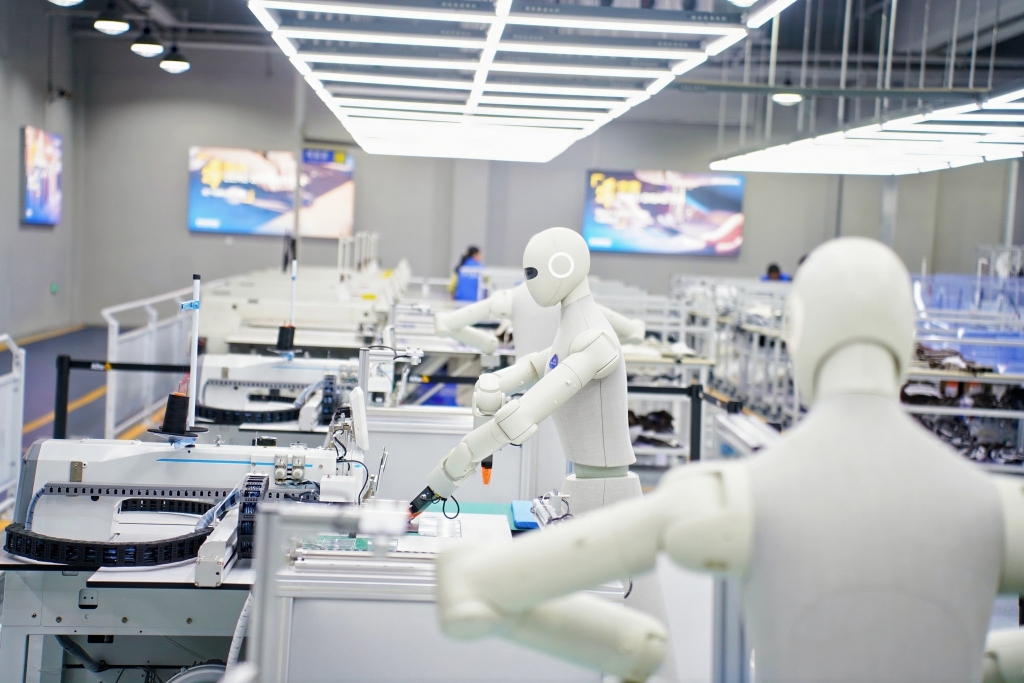
In a report published on November 19, 2026, Chinese fashion retailer Peacebird described a sewing-robot project as a response to the difficulty of hiring skilled garment workers. The company has not disclosed a firm number of robots it plans to buy, and the machine is not yet capable of performing complex sewing on its own.
Peacebird and technology company Aitu demonstrated their jointly developed humanoid sewing robot in Ningbo, Zhejiang province, on November 18. It can take part in production steps involving components such as cuffs, but its current role is mainly to pick up and position fabric; sewing equipment performs the stitching.
Wang Pengyu, director of Peacebird’s Excellence Technology Center, told reporters that experienced sewing workers are increasingly hard to recruit, even though the company offers starting monthly pay of 6,000 to 8,000 yuan plus social insurance and a housing fund. He said the workforce is aging, fewer young people want to enter the trade, and the industry could face a shortage of skilled workers over the next decade. Sewing requires coordination, speed and precision, he added, making training more demanding than for some other factory jobs.
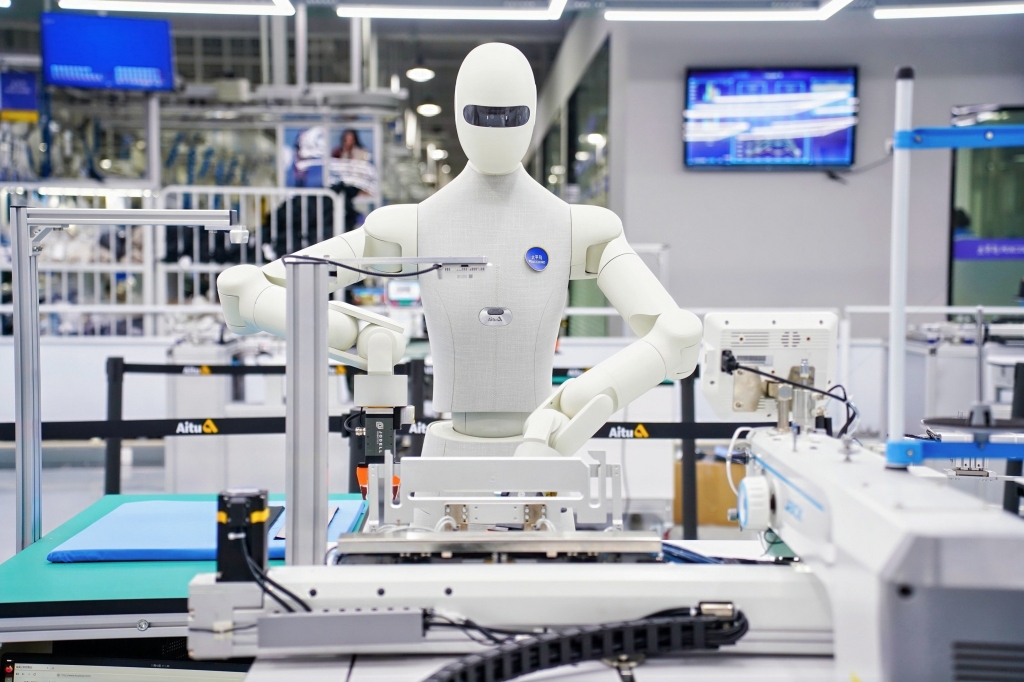
Handling fabric is a technical obstacle for robots because it can deform or slip. Aitu founder and CEO Zhang Hanwen said his team has collected more than one million training data points and that the robot’s success rate for a single fabric pick-up exceeds 96%. Some unusual fabrics remain difficult to handle, he said.
Zhang put the robot’s official standard price at 308,000 yuan per unit and said it currently works at about 50% to 70% of a human worker’s efficiency. He expects changes to grippers and other systems could improve efficiency on relevant tasks by a further 20% to 30%; that is a projection, not a reported result.
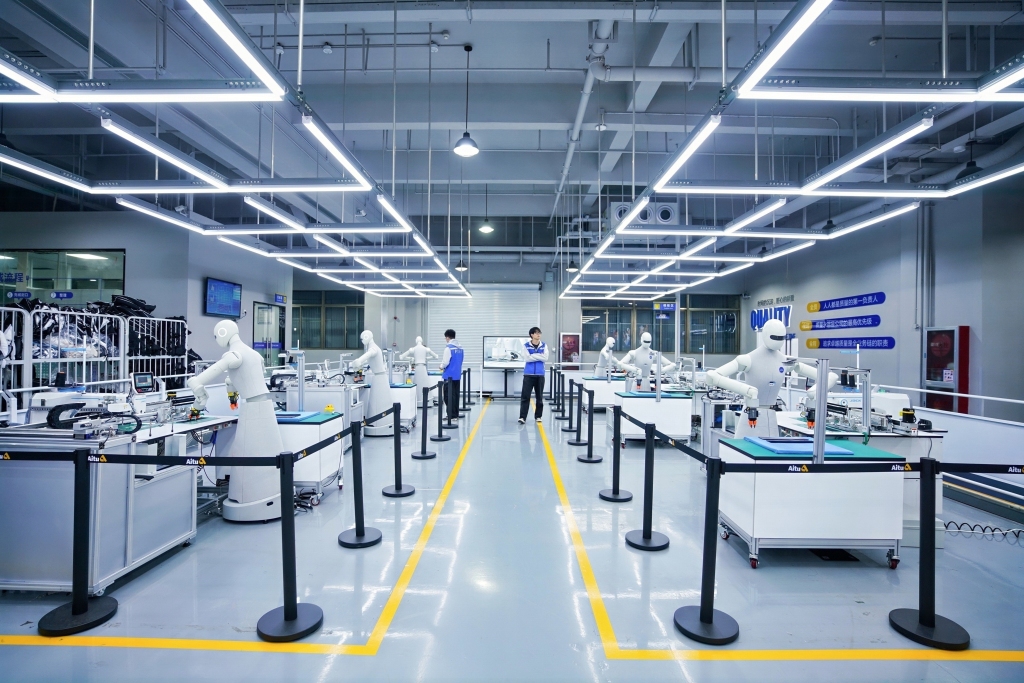
Wang said simpler tasks may be automated first, while the most difficult operations—including work requiring greater precision and experience—will still need skilled workers in the near term. He estimated that the hardest category accounts for about 10% of garment-making operations. Zhang suggested robots might perform most garment-production steps in roughly a decade, but said that goal depends on further technical advances.
Peacebird currently regards the project as a strategic investment rather than one judged solely on short-term returns, Wang said. He said the company is preparing for hiring difficulties, not seeking to eliminate its existing workers.