At the November 2026 CADE Ejecutivos gathering in Urubamba, 60% of executives surveyed by Ipsos said Peru was making progress, the highest share since 2016. That was double the 30% recorded in 2025 and up from 3% in 2022. But fewer executives signaled a change in their own spending: 41% said they planned to increase investment.
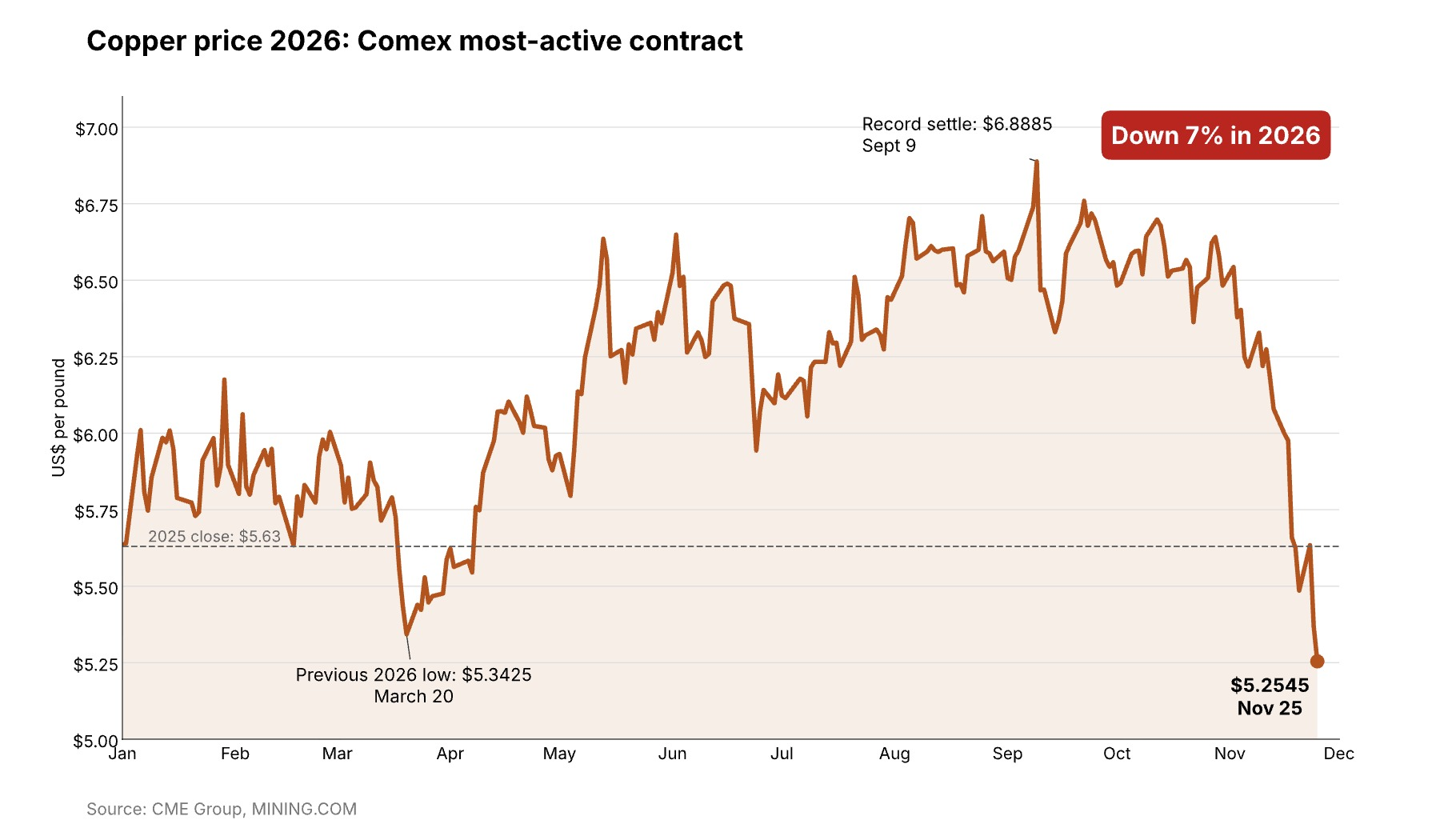
Bloomberg’s Carla Samon Ros reported on November 26 that business leaders at the annual gathering saw the political climate turning in their favor. Markets told a different story. Copper, Peru’s biggest export, traded at $5.25 a pound on November 25, down 24% from its September 9 record of $6.889. The iShares MSCI Peru and Global Exposure ETF closed at $73.11 on November 25, 23% below its 52-week high of $95.28.
Mining spending rises faster than output
Copper accounted for $28.9 billion, or 31%, of Peru’s exports in 2025. The country produced a record 2.77 million tonnes that year, but that was only 1.2% more than in 2024. With production roughly flat since 2023, a change in the copper price can affect export earnings well before investment in a new mine adds to output.
Mining investment was rising before President Keiko Fujimori took office on July 28. It reached $2.05 billion in the first four months of 2026, up 43.5% from a year earlier. According to Industrial Info Resources, Peru’s energy and mines ministry expected full-year investment to reach $6.3 billion, the highest in a decade.
Industrial Info tracked 766 metals and minerals projects in Peru worth more than $54 billion, including $35.7 billion in copper projects. That figure includes projects not yet under construction. Southern Copper, the largest mining investor in Peru in the first four months of 2026, has both expansions at operating mines and unbuilt projects such as Tía María and Michiquillay. Permits, community agreements and security remain constraints on new construction.
Executive support does not translate into a congressional majority
Ipsos found that 66% of executives approved of Fujimori. In a separate measure of public opinion after her first 100 days, Ipsos put her approval at 37%, with 53% disapproving. Her Fuerza Popular party held the largest bloc in both houses of Congress, but its 41 seats in the 130-seat lower chamber left it 24 votes short of the 65 needed to pass a bill on its own.
Security was a priority even among the executives who welcomed the political shift. Across the CADE survey, 40% of companies reported higher security costs and 29% reported stolen goods. Two-thirds of executives said fighting extortion should be the government’s first task.
A Peru fund reflects both bank earnings and copper prices
The US-listed Peru ETF held 44 securities, but two companies accounted for about 46% of its assets: financial group Credicorp at 26.2% and Southern Copper at 20.1%.
Credicorp’s earnings per share roughly doubled over three years to $27.71 for the 12 months to the reporting period, while its return on equity rose from 15.8% to 19.9%. Its share price rose faster than earnings: from the end of 2023 to late November 2026, the stock climbed from $126 to $351 and its valuation rose from 9.1 to 12.7 times trailing earnings. The outlook for lending matters to that valuation. On November 12, Peru’s central bank raised its policy rate to 4.50%, its first increase in nearly four years, to curb inflation driven by food and energy prices.
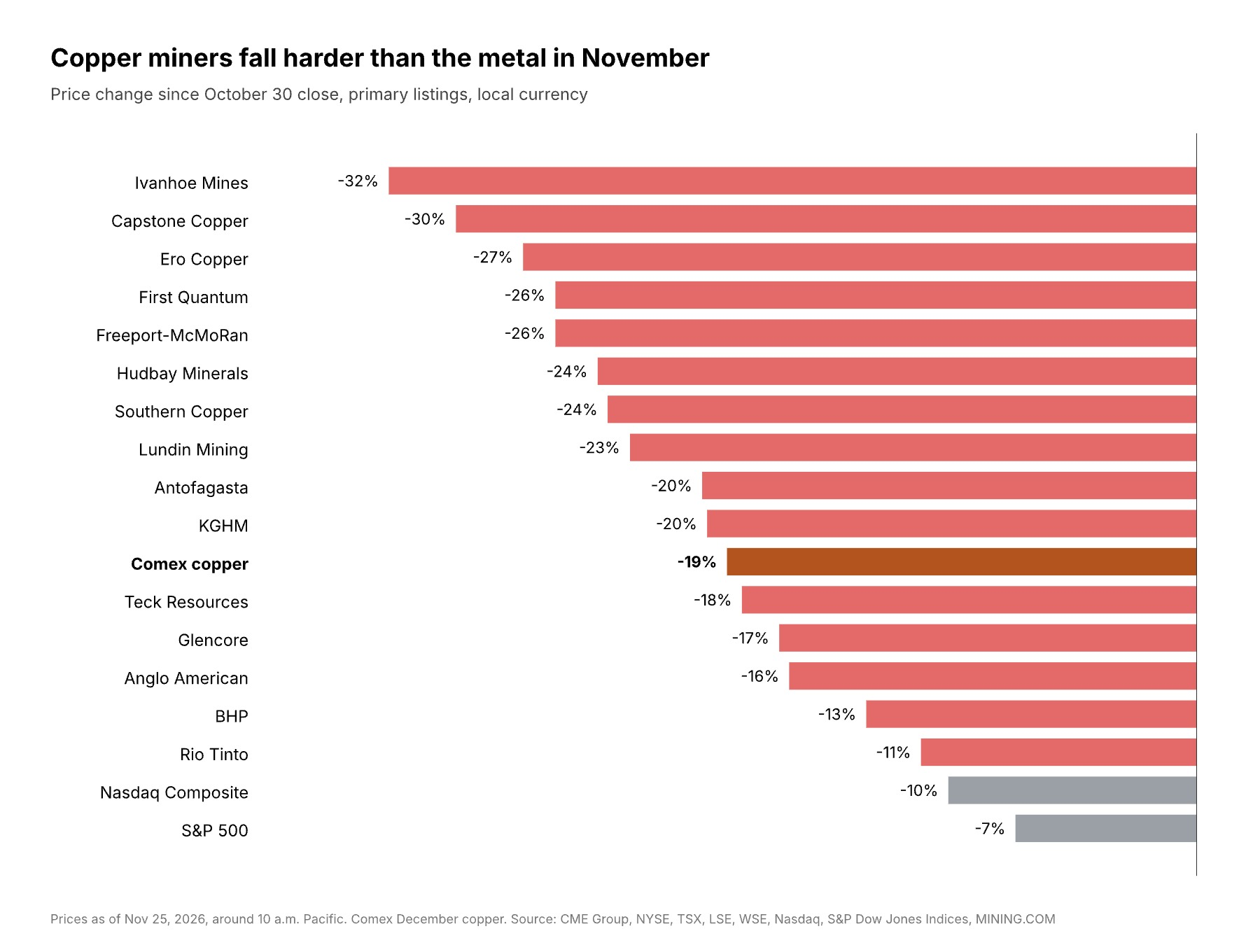
At Southern Copper, record copper prices helped lift nine-month adjusted earnings before interest, taxes, depreciation and amortization to $8.6 billion, up 56% from a year earlier. By November 25, copper had fallen 19% during the month, and the shares had given back their autumn gains.
For the mining industry, two decisions would offer more concrete evidence of the shift executives anticipated. The government’s mining formalization bill, known as MAPE, still required congressional passage, and the Reinfo register was due to expire in December 2026. Separately, a construction decision with a budget and start date for Tía María or Michiquillay would show that planned investment was moving toward production. Neither outcome was established by the confidence survey.