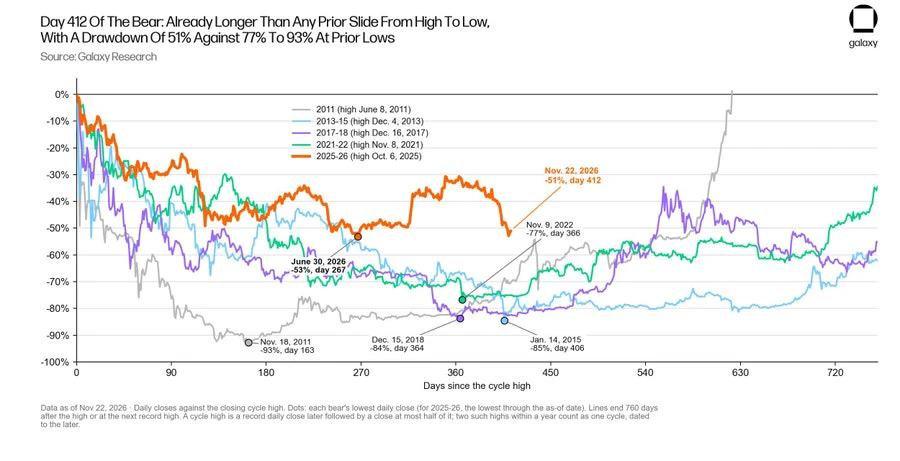
Bitcoin traded near $59,300 on November 28, 2026, about 53% below its October 2025 record of $126,080, according to AInvest data. Even at its November low of $55,121, the percentage decline was smaller than in any of the four previous bear markets in Grayscale’s tally. Yet holders had already recorded more losses in dollar terms than in any of those downturns.
The distinction is what each figure measures. The drawdown compares two prices: the peak and the subsequent low. Realized losses add up losses on coins sold below the price at which they last moved. By that second measure, losses reached $259.2 billion through November 21, according to an on-chain analysis by Darkfost reported by CryptoFrontNews. That exceeded the 2022 bear market’s $211.3 billion and the $55.6 billion recorded in 2018. By contrast, Grayscale’s tally, reported by CoinTurk, put the November peak-to-trough decline at 56%, against losses ranging from 77% to 94% across the four earlier cycles.
Two sources of demand weaken
U.S. spot bitcoin exchange-traded funds recorded $5.39 billion in net outflows in November through the 25th, according to SoSoValue data cited by InsideBitcoins. Even before month-end, redemptions had surpassed the previous monthly record of $4.51 billion in June. The funds had attracted net inflows of $35.24 billion in 2024 and $21.37 billion in 2025. Through November 25, they had lost a net $5.02 billion in 2026, putting them on course for their first calendar year of net redemptions since their January 2024 launch.
The supply of dollar-linked stablecoins, which traders can use to purchase crypto assets, also fell. DeFiLlama data reported by BigGo showed that supply shrank by about $16.5 billion in a month to roughly $283 billion. On Ethereum and Tron, the supply of Tether’s USDT fell $8.1 billion, or 4.4%, to $174.5 billion in the 60 days through November 23, according to CryptoQuant data reported by The Block.
CryptoQuant found that bitcoin had averaged a 9.5% loss in 60-day periods when USDT supply contracted, compared with a 7.6% gain when it expanded. The historical association does not establish that changes in USDT supply caused those returns.
A corporate buyer shifts its spending
Strategy’s latest equity sale illustrates why the price of its shares matters to bitcoin demand. The company raised $176.7 million by selling 1.93 million shares, but spent only $29.6 million on bitcoin. It used $147 million to repurchase its dividend-paying STRC preferred stock, according to its latest 8-K filing as reported by Bitcoin.com News.
Strategy held 851,305 bitcoin purchased for $64.23 billion, or an average of $75,446 per coin. At $60,000 per bitcoin, those holdings were worth about $51 billion, compared with the company’s $35.7 billion stock market value. That simple comparison does not account for the company’s full capital structure, but it helps explain the shift: selling common shares at a discount to the bitcoin holdings to buy more coins can reduce the amount of bitcoin per share.
Miners faced a different financing pressure. Coin Edition reported JPMorgan’s estimate that mining one bitcoin cost about $86,000, roughly $26,000 above a market price of $60,000. Public miners sold 108,247 bitcoin, worth about $8.08 billion, in 2026 through November 10, according to Lookonchain data cited by Coin Edition. MARA used $750 million of proceeds to repay loans.
What sentiment leaves out
Crypto’s Fear & Greed Index fell to 7 on November 22, down from a 2026 high above 72. That reading captured pessimism, but it could not show whether holders who needed cash had finished selling. In a note reported by Seeking Alpha, Galaxy Research said only two of the 13 indicators it tracks for a market bottom were present as of November 22. Bitcoin had not closed below its realized price—the average price at which coins last moved—whereas it had spent at least 140 days below that level during each previous bear market.
That does not rule out a sharp rally. CryptoQuant’s Ki Young Ju estimated that a rise from $60,000 toward $100,000 could trigger about $16 billion in short liquidations, as traders betting against bitcoin were forced to buy it back. Such buying could lift the price without reversing ETF redemptions or the contraction in stablecoin supply. A rebound and a sustained return of demand are different developments; the November flow figures offered evidence for neither a definitive bottom nor an inevitable further decline.