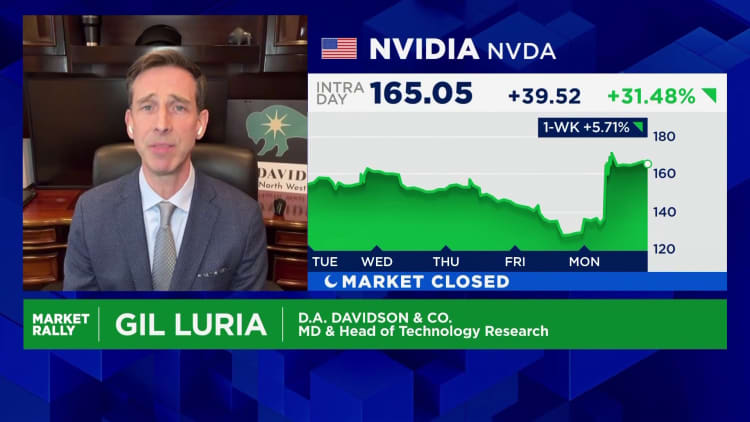
Nvidia’s board unanimously reinstated Jensen Huang as chief executive on Monday, November 23, 2026, less than a week after Chairman Harvey Jones said directors had accepted Huang’s resignation and did not intend to bring him back. The shares rose as much as 36% during the session and closed 31% higher. They had closed at $125.53 the prior Friday, even after the company reported strong third-quarter results.
A petition calling for Huang’s return had drawn more than 200,000 signatures, according to its organizers. The rally spread more widely: the Nasdaq Composite gained 6.5% and the S&P 500 rose 4.7%, each posting its strongest session since April 2025.
How the board reversed course
On Nvidia’s third-quarter earnings call on November 17, Jones said the board had accepted Huang’s resignation and did not intend to reinstate him. On Monday the board said it had voted unanimously to bring Huang back after discussions with him and input from senior U.S. government officials. It also said its investigation into Huang’s conduct would continue. The board has not publicly detailed what it was told.
President Donald Trump told CNBC that he had spoken with board members and that his administration provided assurances based on the information available to it. “The board decided to do what we wanted to do,” he said, adding that he believed his intervention had been important. “I’ve been speaking to the board directly and indirectly, and I felt very strongly about it.” Semafor reported, citing people familiar with the matter, that Trump also called into an Nvidia board meeting to argue for Huang’s return.
What lawmakers are asking
Sen. Jack Reed, a member of the Senate Banking Committee, urged Treasury Secretary Scott Bessent and Commerce Secretary Howard Lutnick on Monday to appear before the committee. Reed did not set out a specific list of questions. His statement cited reporting that Trump had been briefed by intelligence officials led by then-National Security Adviser Marco Rubio before intervening in support of Huang’s return. Reed has called on Huang to disclose his communications with Trump and on Nvidia to release a transcript of the board’s call with the president.
Rep. Gabe Amo, Democrat of Rhode Island and vice ranking member of the House Foreign Affairs Committee, told CNBC that reinstatement could widen congressional scrutiny rather than end it. “I think it frankly broadens the scope of the query,” Amo said, adding that lawmakers should also examine administration officials involved in decisions affecting Nvidia and chip sales to China. He said he expects a planned closed-door interview with Huang on December 1 to proceed. “He should start purchasing his plane tickets to Washington,” Amo said. “It is abundantly clear that this is ripe for questioning by Congress.”
The Senate Banking Committee has scheduled Huang to testify on U.S. export controls on December 3. House lawmakers have also confirmed closed-door interviews with Huang on December 1 and with Nvidia General Counsel Tim Teter on December 2.
Lawmakers are still seeking answers about alleged smuggling of Nvidia products to China, possible diversion for military use, and possible advancement of Chinese artificial-intelligence capabilities. Reps. John Moolenaar, Rick Crawford and Brian Mast said in a joint statement that the board’s brief internal investigation and Huang’s reinstatement “do not erase the national security threats and questions that must be addressed.” Their inquiry may also examine what Nvidia knew about the customers and resellers involved and what controls the company had in place. On November 11, Sens. Elizabeth Warren and Chris Coons asked senior administration officials to retain records related to Nvidia exports of advanced AI chips to China and associated national security concerns.
Oversight, succession and growth
Nvidia has promised to hire a chief compliance officer and to establish a committee overseeing national security and export controls. The board’s investigation into Huang’s conduct remains underway. Josh Gilbert, eToro’s lead analyst for APAC and the Middle East, said investors will be watching whether those new safeguards carry meaningful authority.
Succession is a separate question. Gil Luria, head of technology research at D.A. Davidson, said Nvidia has a limited window to prepare for the possibility that a future president may be less supportive of Huang. With Trump’s term ending in two years, Luria argued that the company needs a clearer plan for who could take over if Huang were forced to leave again.
Gilbert pointed to Nvidia’s roughly 75% revenue-growth forecast for the next financial year as evidence of strong near-term demand. He said the longer-term question is whether customer orders and artificial-intelligence investment can sustain that pace. Luria told CNBC that concerns about the broader AI trade remain, including the cost of financing data centers, potential overbuilding by neocloud companies, and obstacles to building new facilities. Bernstein analyst Stacy Rasgon said worries about whether AI spending is achievable and sustainable were not caused solely by Huang’s departure. UBS flagged Nvidia’s roughly $390 billion in supply commitments and the need to keep demand flowing through its ecosystem.
Gilbert said part of Monday’s rally reflected investors recovering earlier losses rather than pricing in new growth. Bernstein restored its “Outperform” rating and kept a $200 price target, while UBS maintained a $220 target. “For the share price, it comes down to whether Nvidia can keep delivering as it has done over recent years,” Gilbert said. “The real worry has been what happens beyond next year. Having Huang back at the helm goes a long way to easing those concerns, because he’s the one who sits down with the biggest customers and gets those multi-year orders over the line.”