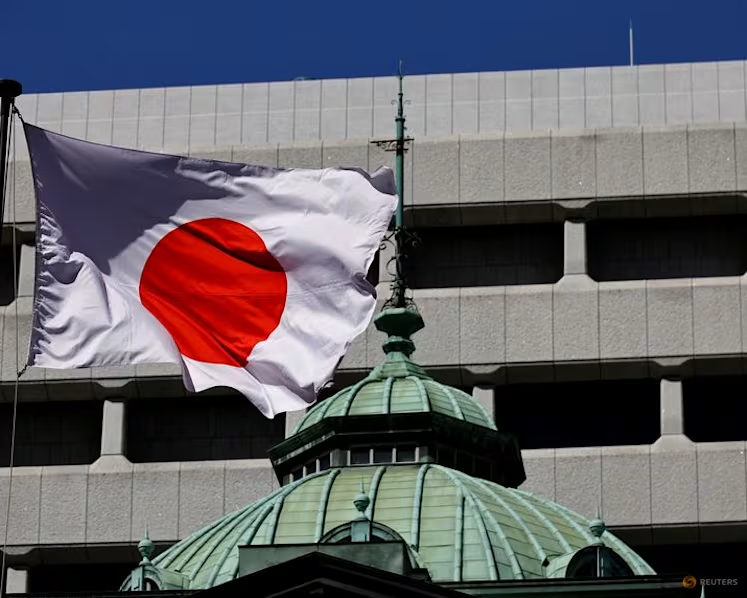
Tokyo’s core consumer prices rose 2.9% in November 2026 from a year earlier, the Japanese government reported on November 27. It was the fastest increase in 16 months. Markets put the probability of a December rate increase by the Bank of Japan at about 70%, yet the yen traded near 159 to the dollar, within a couple of yen of its July low.
That combination matters for Japanese life insurers, whose obligations are in yen. Nine of the largest hedged just 43.3% of their foreign assets against currency movements in the six months through September, the lowest share in Bloomberg’s data going back to 2011. Leaving a dollar bond unhedged saves an insurer the cost of currency protection while the yen is weak. It also means the bond is worth less in yen if the currency recovers, even if its dollar price does not change.
Why a December hike might not lift the yen
Tokyo’s core inflation measure, which excludes fresh food but includes fuel, rose from 2.6% in October. November’s reading was a tenth of a percentage point below the 3.0% consensus but marked a third consecutive month above the BOJ’s 2% target. Expiring utility subsidies accounted for part of the increase. Prices also rose for food, everyday necessities and hotel stays. Excluding food and energy, inflation was 2.5%.
The BOJ had raised its policy rate three times in 12 months to 1.25%. A quarter-point increase at its December 17–18 meeting would take the rate to 1.5%. But the Federal Reserve was also expected to raise its target range by a quarter point on December 9, from 3.75%–4.00% to 4.00%–4.25%. If both banks moved as expected, the gap between the midpoint of the US range and Japan’s rate would remain about 2.6 percentage points.
The yen fell after the BOJ’s December 2025 and September 2026 increases and was little changed after its June move. A stronger stretch came without a rate change, when Governor Kazuo Ueda said the board would discuss an increase at every meeting. That record makes the BOJ’s guidance about the pace of further increases important alongside the December decision itself.
What a Treasury pays after currency protection
A 10-year US Treasury yielded about 4.9% in late November, well above the 2.70% available on a 10-year Japanese government bond. For an insurer selling dollars forward to protect the Treasury’s yen value, however, the comparison was reversed. Bloomberg calculated on November 25 that the Treasury yielded about 1.8% after hedging, roughly 0.9 percentage point less than the Japanese bond.
Insurers cut their currency protection more sharply than their overseas holdings. At the nine insurers, currency derivatives fell 7.6% in the six months through September, while overseas securities declined only 1.5%. With roughly 57% of the foreign portfolio unhedged, a 10% yen rally against the dollar would cut the yen value of an unhedged dollar holding by about 9%, assuming its dollar price did not change.
The implications extend to both currencies and bonds. If insurers rebuild their hedges, they would sell dollars and buy yen forward, potentially reinforcing a yen recovery without having to sell the bonds themselves. For the Treasury market, the separate question is where insurers put new money: as long as a Japanese government bond pays more than a currency-hedged Treasury of the same maturity, insurers can earn a higher yield at home without taking dollar risk. Their September holdings show that this incentive need not translate into an immediate sale of existing US assets.