President Keiko Fujimori’s government is preparing an 18 billion-sol ($5.2 billion) package for 2027 to help Peru withstand El Niño. It wants Congress to raise the 2027 deficit ceiling from 1.4% to 2.4% of GDP and allow higher ceilings through 2030. Peru’s Fiscal Council supports borrowing more for the emergency but says the extra room should be temporary and limited to the response.
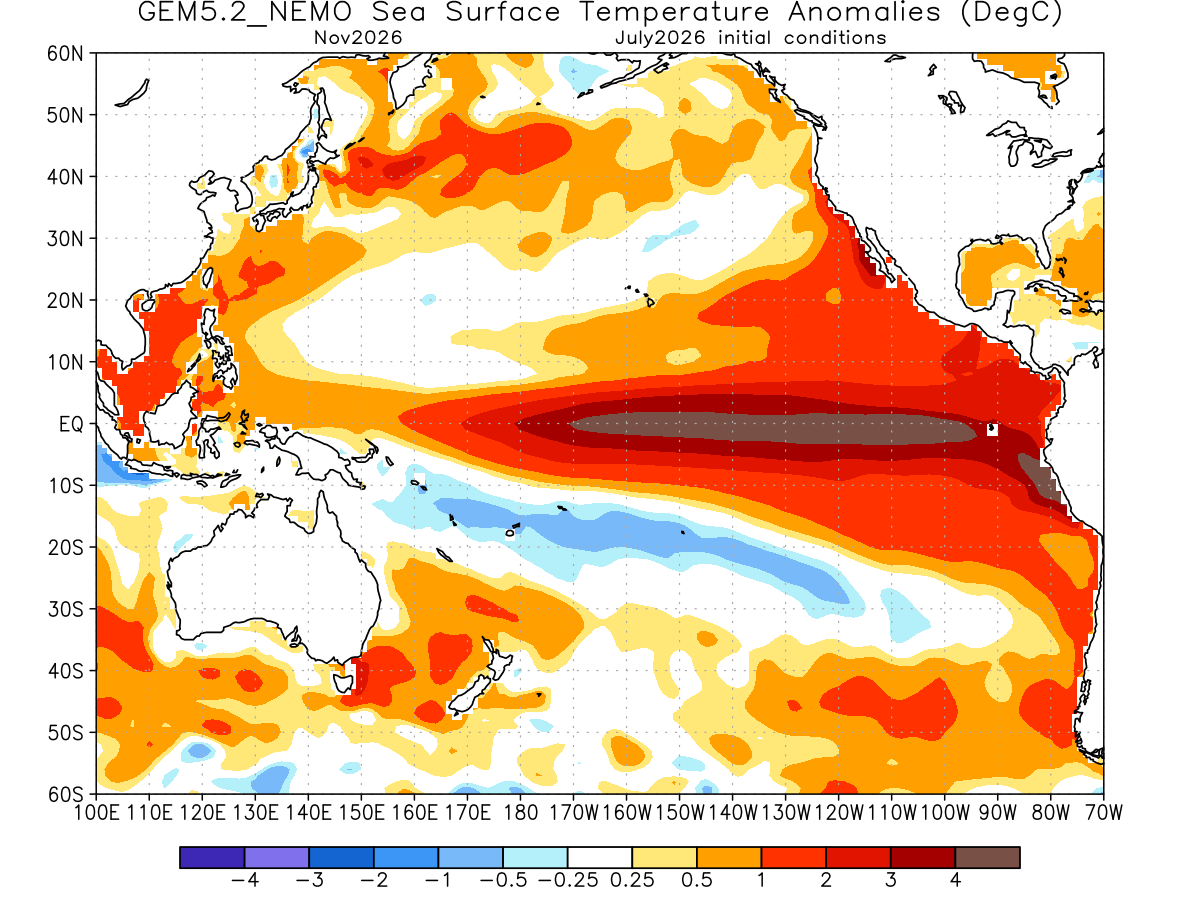
The duration matters because the expected economic disruption is concentrated in the first half of 2027. El Niño can bring floods to Peru’s northern coast and drought to its southern highlands. In November 2026, NOAA’s Climate Prediction Center put the probability of strong to very strong conditions through January–March 2027 at more than 79%. Scotiabank said economic growth could slip below 2% in the first half of 2027.
What the package would fund
Infrastructure accounts for 13 billion soles, or 72% of the proposal. That includes 7 billion soles to finish about 250 stalled public works that are already more than halfway built. Restarting those projects is intended to support demand as the weather disrupts economic activity. The plan also sets aside 2.5 billion soles for direct payments to vulnerable households for up to five months, 2 billion for maintenance and 500 million for diesel subsidies.
The government is preparing to issue about 10 billion soles ($2.9 billion) in international bonds, according to Gestión, as cited by Scotiabank. That would cover more than half the proposed package.
The 2027 plan is separate from an 8.2 billion-sol supplement Congress has already approved for the 2026 budget. Of that amount, 581 million soles was explicitly designated for El Niño prevention and emergency response. The finance ministry said bond sales would cover 53.8% of the supplement and higher tax revenue tied to elevated copper prices would cover the remaining 46.2%.
How much does copper matter?
ING estimated that copper fell about 15% to an 11-month low in November 2026. The decline matters for Peru, the world’s third-largest copper producer, but a short-lived price drop does not translate directly into an equivalent loss of tax revenue. Peru taxes mining profits and sales, so the effect depends in part on how long lower prices persist.
The finance ministry expects natural-resource revenue to rise from 1.8% of GDP in 2025 to 2.6% in 2026. Its estimates indicate that a 10% change in copper prices affects revenue by about 0.1 to 0.2 percentage points of GDP. By comparison, the proposed increase in the 2027 deficit ceiling would give the government an additional full percentage point of GDP in borrowing room.
Peru’s public debt is about 28% of GDP. BBVA Research estimated the fiscal deficit at 0.7% of GDP in October 2026, down from 2.2% at the end of 2025. Those figures help explain why Peru can consider borrowing for the emergency despite the copper selloff.
The Fiscal Council’s objection concerns what happens after the emergency. Besides calling for a temporary increase in the deficit ceiling, it wants to retain a limit on spending growth that the government proposes to suspend. Peru is on track to breach that limit for a third consecutive year. Council president Alonso Segura told Bloomberg the government was assuming “very optimistic scenarios.” For bond investors, the price of the planned issue will offer a measure of what lenders charge Peru to borrow as Congress weighs rules that could outlast the weather disruption by several years.