Broadcom shares closed at $312.34 on Nov. 27, 2026, down 22.5% over 12 months despite a 3.8% gain that day. That was the weakest one-year price return among eight large chipmakers, while the VanEck Semiconductor ETF gained 24.9%. Over five years, however, Broadcom gained an annualized 41.7%, second only to Micron’s 50.6% in the group. The returns are adjusted for stock splits and exclude dividends.
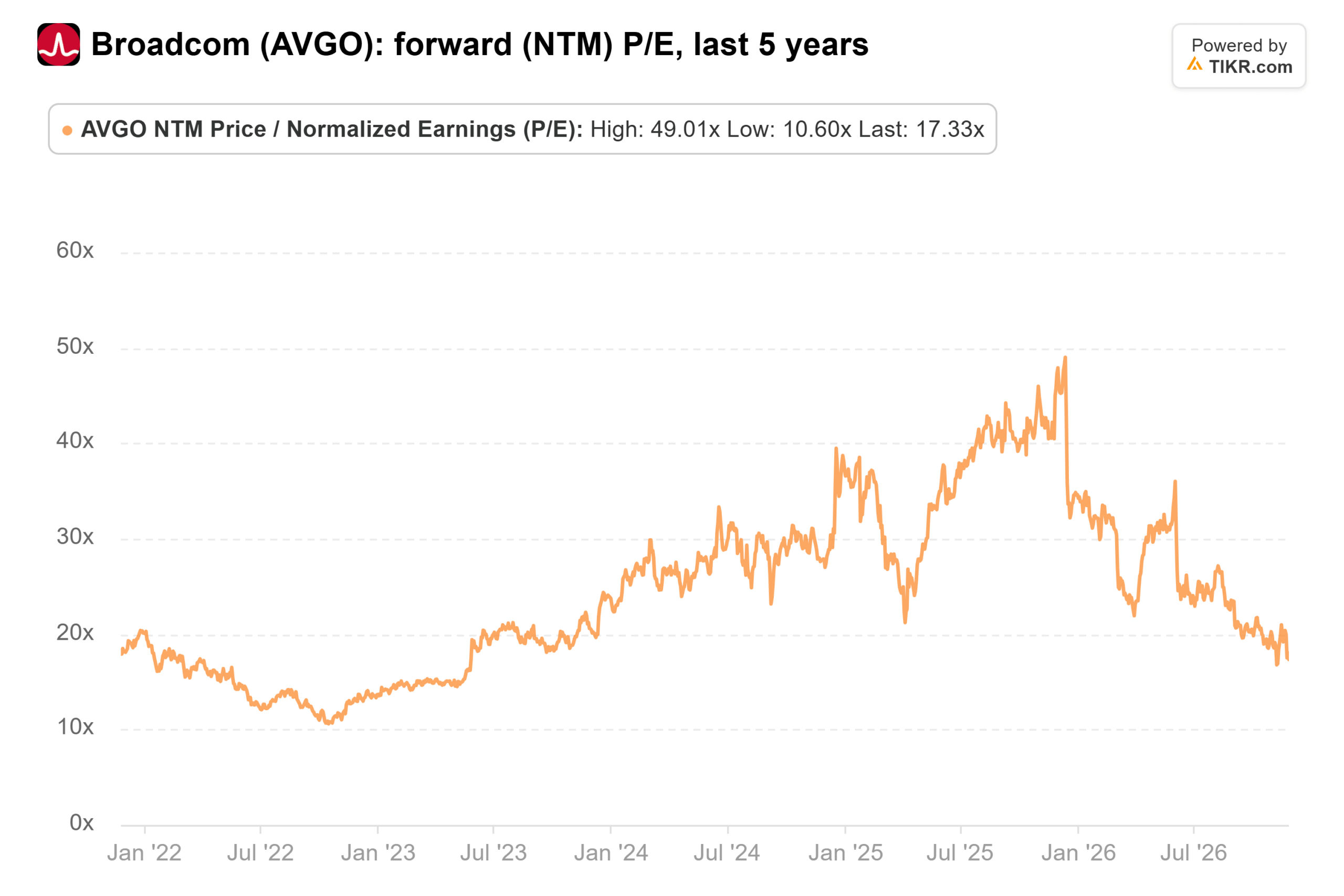
The starting point matters. By Nov. 28, 2025, Broadcom had already gained 49% in a year. Its shares went on to reach a record closing price of $481.57 on June 2, 2026. By Nov. 27, they were 35.1% below that close, even as the company reported rapid earnings growth. What changed most was the price investors were willing to pay for those earnings.
Earnings forecasts held as the shares fell
TIKR data put Broadcom’s forward price-to-earnings ratio at 17.3 on Nov. 24, below its five-year average of 24 and close to the S&P 500’s mid-November multiple of roughly 18, according to FactSet data cited by The Motley Fool. Over about 90 days, Broadcom shares fell 15%, while analysts’ consensus estimate for fiscal 2027 earnings slipped just 1%, from $19.52 to $19.33 per share.
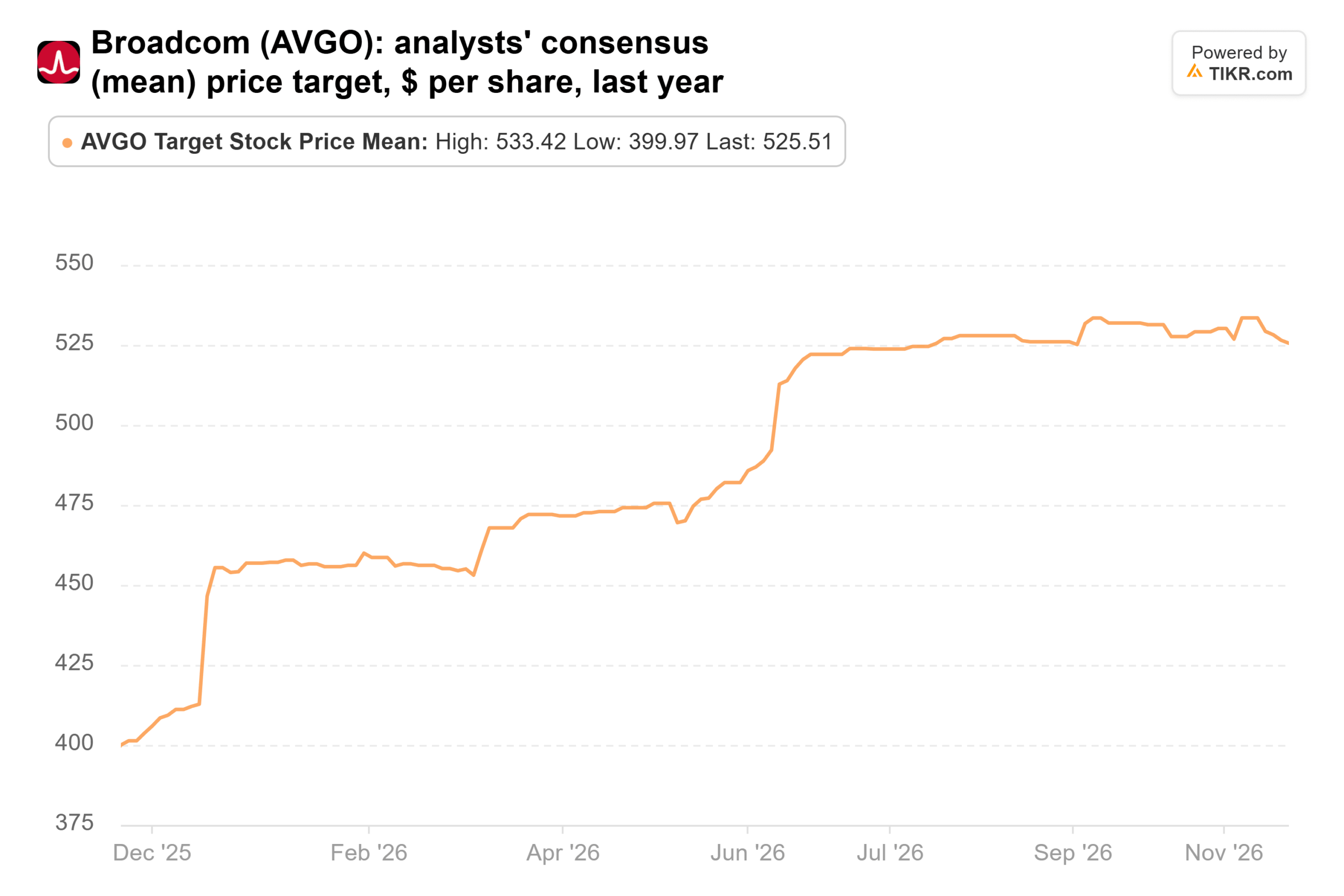
Analysts’ price targets also remained well above the share price. TIKR put the consensus target at about $526 in late November, roughly 75% above the Nov. 25 close of $300.86, even after UBS lowered its target from $470 to $425 and retained its Buy rating. Those targets are forecasts, not realized returns.
A lower valuation relative to Broadcom’s own history did not make it inexpensive on every measure. As of Nov. 28, Broadcom traded at 16.7 times trailing sales, the highest multiple among six chipmakers compared in Ainvest market data. Nvidia traded at 10 times sales and Micron at 6.2 times, though both had posted faster revenue growth than Broadcom in their latest quarters.
Five customers account for more than half of sales
Broadcom sells infrastructure software, chiefly VMware, as well as semiconductors. In its fiscal third quarter ended Aug. 2, revenue rose 86% year over year to $29.6 billion, and non-GAAP earnings per share rose 96% to $3.32. AI semiconductor revenue rose 221% to $16.7 billion. AI chips accounted for 56% of sales but about 84% of the year-over-year revenue increase.
Broadcom designs custom chips for six customers. It estimates that its five largest end customers accounted for about 55% of third-quarter revenue, up from about 40% a year earlier. That dependence makes a change in one customer’s plans consequential. On Nov. 20, TF International analyst Ming-Chi Kuo reported that Google had cut planned 2027 shipments of Broadcom-designed TPU 8i chips by about 1 million units, or roughly 20%, with some business shifting to MediaTek. The reported cut was not confirmed by the companies. Broadcom fell 12.2% that day, but the selloff extended beyond Broadcom: U.S. chip stocks valued at $2 billion or more fell a median of 10%.
Broadcom also has a financial stake in the expansion of Anthropic, which it expects to become its largest customer in 2027. According to The Motley Fool, Anthropic’s S-1 filing disclosed a five-year chip lease with Broadcom carrying $161.2 billion in cumulative rent. A bank-led financing vehicle arranged $63 billion to buy Broadcom chips and lease them to Anthropic. Broadcom agreed to cover up to $43 billion if Anthropic misses rent payments and the chips’ residual value does not cover the shortfall. That is a contingent obligation, not a loss Broadcom has incurred.
What the Dec. 9 report can clarify
Broadcom is scheduled to report fiscal fourth-quarter results after the market closes on Dec. 9. Management has forecast $34.8 billion in quarterly revenue, including $21.7 billion from AI chips. Its fiscal 2027 AI revenue goal of about $115 billion requires an average of nearly $29 billion per quarter. Chief Executive Hock Tan has said supply is secured for that goal and demand exceeds the outlook.
First-quarter guidance will indicate how much growth Broadcom expects early in fiscal 2027. An AI revenue forecast in the mid-$20 billion range would put the company closer to the quarterly average it needs; one near $22 billion would leave more of the increase for later in the year. Neither figure would resolve the longer-term question behind the valuation: how reliably a handful of customers will sustain that spending.