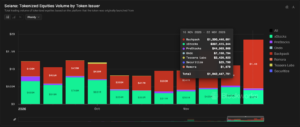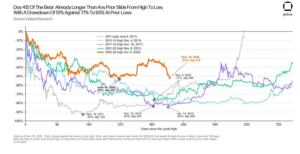
Bullish (NYSE: BLSH) named Aptos and Ethereum as planned additions to Solana for its issuer-sponsored tokenized shares in a November 3, 2026, announcement reported by Crypto Briefing on November 27. Solana was already in use: Bullish put its own equity register on the network in May and began trading tokenized BLSH shares on its exchange in August.
The choice of network determines how investors can transfer a token, not who keeps the official record of ownership. In Bullish’s model, that job belongs to Equiniti, the UK transfer agent it has agreed to acquire in a deal announced at $4.2 billion. Equiniti serves nearly 3,000 issuers and 20 million shareholders. The acquisition is expected to close in January 2027.
What issuers get
Under the issuer-sponsored model, a company authorizes a token representing the same class of shares. Transfers can be restricted to approved wallets, while Equiniti maintains the shareholder list used to administer dividends, proxy voting and other corporate actions. Offering multiple networks lets an issuer choose one its investors already use. Bullish has said it will offer secondary trading in eligible tokenized equities outside the United States; the announcement did not open a US retail market.
Bullish demonstrated one potential use at the New York Stock Exchange on October 27, transferring 61 million reserved BLSH shares on Solana in seconds. That figure closely matches the 61.1 million shares specified as payment for Equiniti. The figures suggest a connection to the acquisition, but the demonstration was not a closing payment.
Equiniti’s existing issuer relationships could matter as much as the technology. According to crypto.news, 56 of the 62 companies approached by OKXICE objected to inclusion in its tokenized stock offering, which launched with six names on November 23. Bullish also faces competition for issuers that do want to participate: Nasdaq and Kraken are pursuing an issuer-focused platform planned for the second quarter of 2027.
A fixed share count shifts the deal’s value
The announced $4.2 billion price comprised $1.85 billion of assumed debt and about $2.35 billion in Bullish stock. The merger agreement fixed the share count using a 30-day volume-weighted average price of $38.48. When Bullish closed at $20.36 on November 18, the shares due to the seller, a Siris fund, were worth about $1.24 billion. Including debt, that put the deal’s implied value at about $3.1 billion, 26% below the announced figure.
The agreement does not adjust the share count for a price change or give the seller a termination right tied to a decline in Bullish stock. Under the agreed terms, Siris would receive about 29% of the combined company and two board seats. Restoring the original dollar value at $20.36 would take about 115 million shares and raise Siris’s stake above 40%. That would require renegotiation; it is not a provision of the deal.
Registry income and tokenization fees are different businesses
Bullish reported third-quarter adjusted revenue of $84.4 million, up 10% from a year earlier. Transaction revenue rose 5% to $28 million even as gross digital-asset sales fell 23% to $32.1 billion. Subscription, services and other revenue rose 13% to about $56.4 million. Reported net income attributable to shareholders was $555.9 million, reflecting a $598 million fair-value gain on digital assets. Adjusted net income was $18.7 million.
The acquisition would change the scale and mix of those earnings. Management’s pro forma estimates for 2026 put combined adjusted revenue at about $1.3 billion and EBITDA less capital spending at about $500 million. The estimates imply that Equiniti would supply roughly three-quarters of each. Management is targeting $75 million to $100 million in medium-term net cost savings.
The contribution from tokenization is harder to measure. According to Proactive’s account of the earnings call, Bullish began recording tokenization revenue from multiple customers in the fourth quarter of 2026. Management projects 20% growth in tokenization and blockchain services but has not disclosed the revenue base. Until Bullish reports what issuers pay for the service, it remains unclear whether tokenization will increase revenue per issuer or chiefly help Equiniti retain its existing clients.