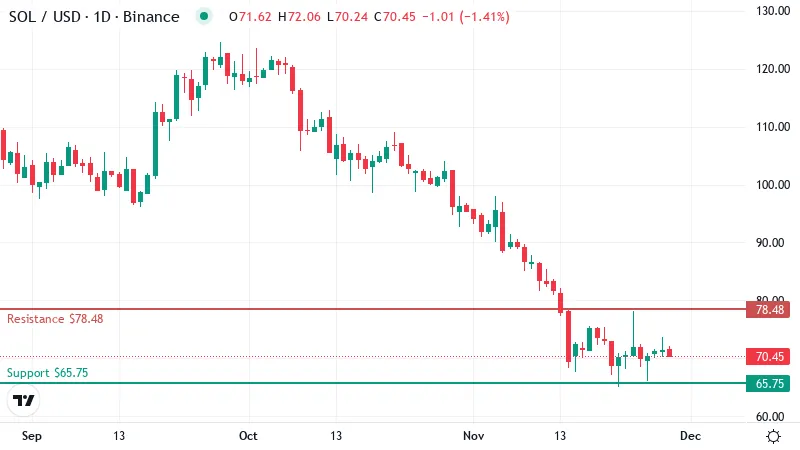
Solana said the value of tokenized U.S. Treasuries on its blockchain reached $1.88 billion in November 2026, about 3.5 times the level a year earlier, according to a statement reported by ChainCatcher. SOL, the network’s token, traded near $70.50 on Nov. 28, down 23% from a year earlier, according to Ainvest data.
The two figures measure different things. Treasury fund investors earn a yield from the underlying government debt, and fund managers collect fees based on the assets they manage. Solana collects fees when users make transactions. Holding a fund share on the blockchain does not, by itself, generate a recurring network fee.
Where the fund fees go
SWEEP, a tokenized Treasury fund run by State Street and Galaxy Digital, illustrates the distinction. Launched on May 5, 2026, the fund held about $454.8 million, including roughly $380 million on Solana. It reported a 3.55% seven-day yield and charged a 0.50% expense ratio.
At that asset level, the expense ratio works out to about $2.3 million a year, including roughly $1.9 million attributable to the shares on Solana. Those are annualized estimates, not fees already earned. The fees go to the fund’s managers, not to the blockchain or to SOL holders.
What the network earns
DefiLlama counted $265.14 million in fees across Solana and the protocols running on it in the 30 days through Nov. 29. The network itself collected $12.84 million, about 4.8% of the total. That figure covers activity across Solana, not just transactions involving tokenized Treasuries.
The longer record shows network fees falling even as Treasury holdings grew. Solana’s base and priority transaction fees totaled $713 million in 2024, $645 million in 2025 and $229 million in the 12 months to November 2026, according to DefiLlama figures cited by CoinSpeaker. At a market value of about $41.5 billion, SOL was valued at roughly 181 times those trailing fees. That ratio compares market value with network activity; it is not an earnings multiple or a measure of income distributed to token holders.
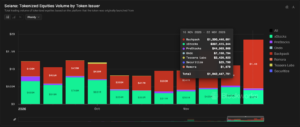
For tokenization to contribute more to network fees, the shares need to change hands or be used in transactions such as borrowing against them. There are signs of that activity in equities: tokenized stocks on Solana reached $1.22 billion in November, nearly double their end-October value, with $1.8 billion in weekly spot trading volume. The $1.88 billion Treasury figure, by contrast, shows how much investors held. It does not show how often those holdings moved or how much Solana earned from them.